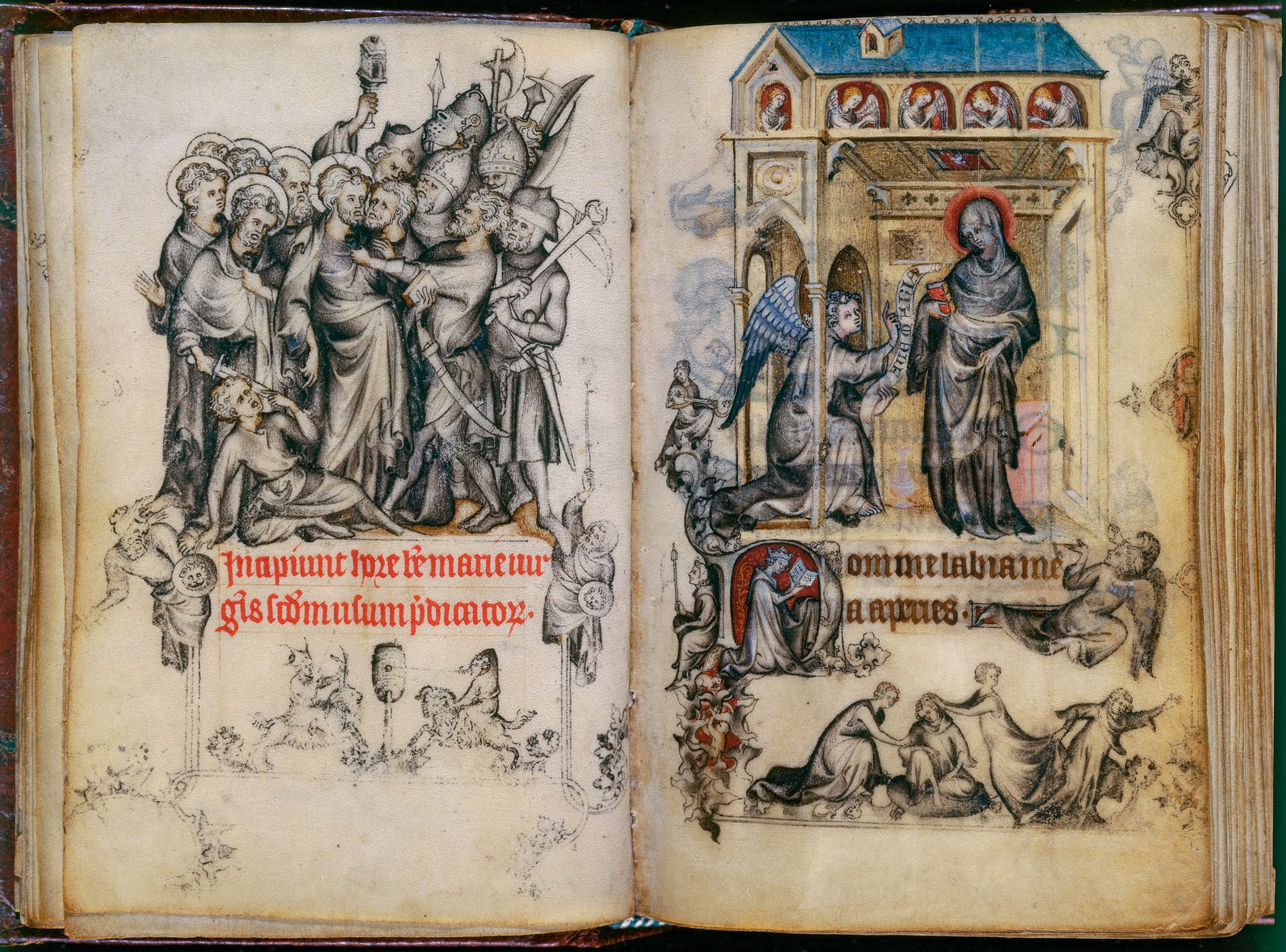
To create this manuscript and ensure it was illuminating to a reader, I decided to use an old tea bag and saturate the paper first to give it a weathered aged look. Medieval manuscripts had to be made out of raw natural materials. The pages were created by stretching and scraping off an animal hyde. With this process came discolorations and many imperfections so I chose to give the paper that effect. For the lettering of this manuscript I chose to use microns as that is my favorite media to use. My favorite way to draw is doing technical illustrations with microns. I followed the edges of the manuscript with gold paint because the manuscripts we saw in class looked most illuminated due to the use of gold. In the filigree I used primary colors. I noted while looking at many examples of manuscripts that the most popular colors were red, yellow and blue. This may have been due to resource scarcity, but even then pigments can be derived from raw materials. Manuscript makers have an understanding of how to use raw materials because almost all of the process of making a manuscript involves raw materials. Colors like red can be derived from berries, beetles, raw clay sediment or even blood for a darker marron. Rocks are also ground to make other pigments like yellow and brown.
Some of the interesting manuscripts that I enjoyed the most include “The Book of Hours of Jeanne d’Evreux” (c. 1324-1328 CE) and “The Westminster Abbey Bestiary” (c. 1275-1290 CE). These manuscripts used detailed drawings to depict people and animals and that to me felt more dynamic and interesting than the letter format of some manuscripts. Overall I enjoyed creating this blog post as this topic interests me and I was able to use one of my favorite mediums.