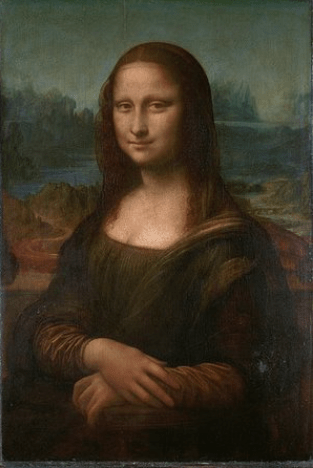
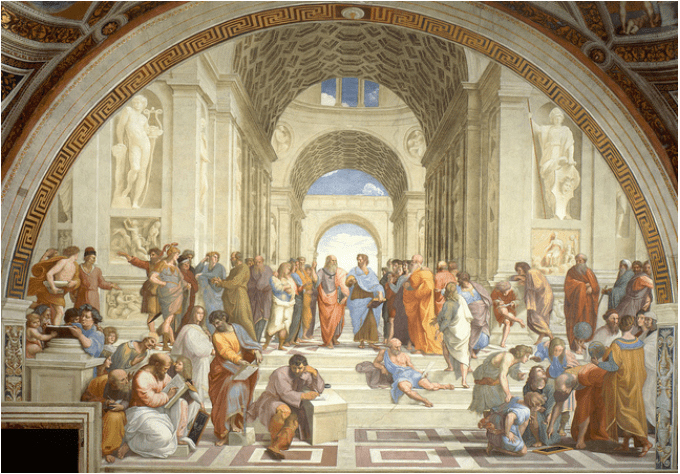
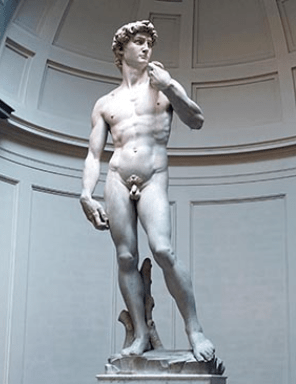
Artists in the 1520s were faced with a real crisis affecting the work they produced. Imagine you are the artist at this time, trying to create a breakthrough, remarkable piece that wins over the masses. By now the High Renaissance had rightfully earned its name by creating some of the most high quality works not of its time period but of all time… We are talking of course about Michaelangelo, Raphael and Di Vinci some of the most successful artists in the world. How do you compete with these giants of their industry? No one proved to be more of an articulate fresco painter than Raphael. You could say Michaelangelo was born in a test tube to sculpt. And no one could get features and proportions so right like Divinci could. This left these aspirational artists wondering; How do I follow that? Artists needed a different approach, this in turn led to the Mannerist and Northern Renaissance movement.
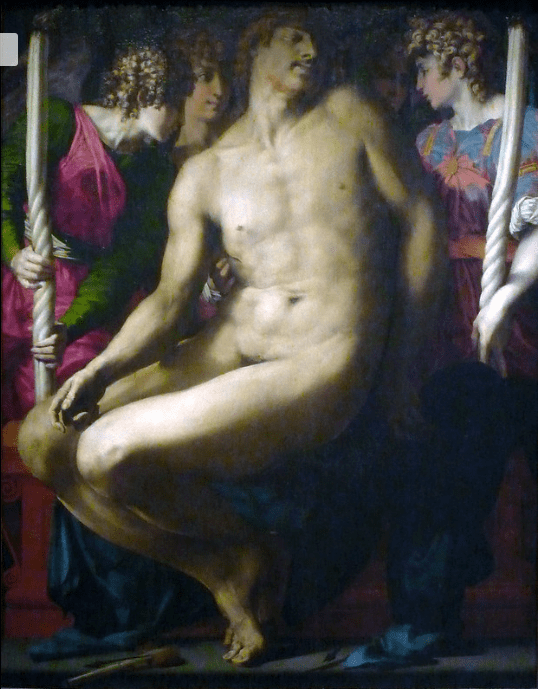
Mannerism as a movement disregards some of the techniques honed by the high renaissance painters and sculptors. All the advances in understanding human proportions, math, continuous narrative, and one point perspective were put on the backburner for a more organic, dreamlike result. When artists started breaking the rules set out by their predecessors, they found they had more freedom in this looser style. As we discussed in class it is sometimes hard to look at art and classify it as mannerist. There are a few elements that can point us in the right direction in defining mannerist work. Mannerism focuses on class and social status. In the mannerism era works would include indicators of wealth and social status. This could be expressed by the fancy textiles a subject might be wearing or even the ornate furniture behind them. Mannerism also meant experimentation with color and proportion. For an example of mannerist work we turn to Rosso Fiorentino’s, The Dead Christ with Angels. Had this work been rendered in typical high renaissance fashion we would see muted more earthy tones rather than these vibrant colors that make us question how such a color was even achieved at the time. In Fiorentine’s work we get the idea that he too is trying to tell the classic story of Christ but in his own stylized manner, consiously avoiding showing us the wounds of Christ and painting him out to be a giant and truly god like. Despite the bright colors something about this work feels dark, emotionally and literally it appears almost to have a vignette over it, getting darker as you look in. A fifth face lurks in the back of the painting almost dissapearing into the black background.
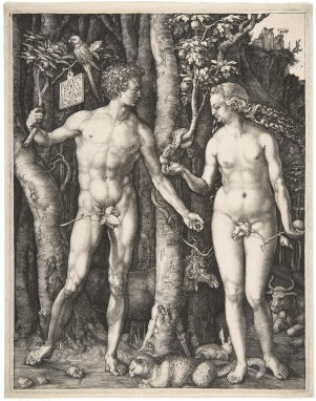
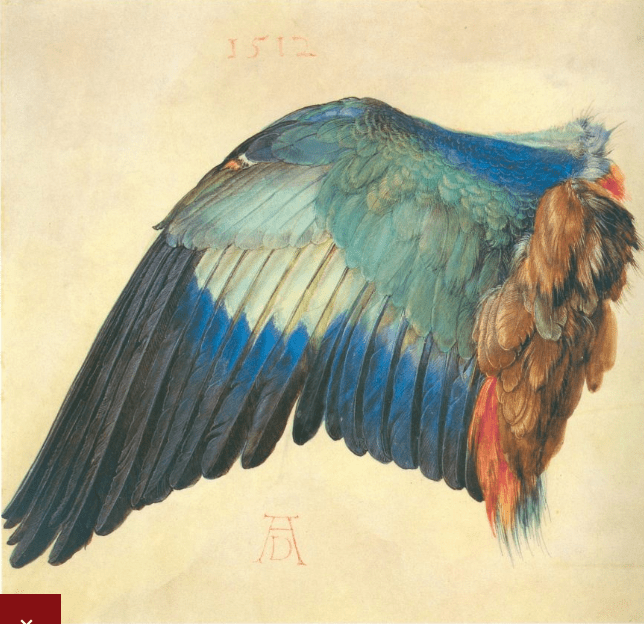
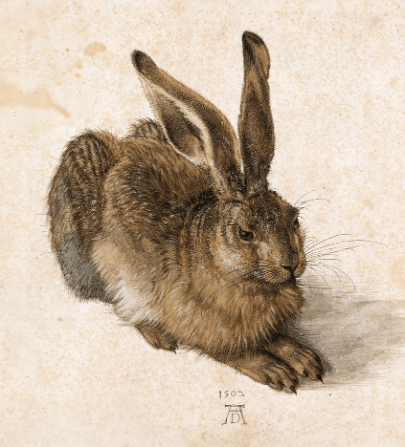
The Northern Renaissance also called the northern european renaissance birthed some more practical works maintaining values of the high renaissance. Some key members of this movement include Jan van Eyck, Hieronymus Bosch and Albrecht Dürer. All these artists created works that were more stylized in narrative but remained true to real life proportions, one point perspective and naturalism. Albrecht Dürer proved that there can be style in an artwork that stays true to realism and naturalism. In his 1504 work Adam and Eve ( the fall of man) he engraved a classical story equipped with classical nudes and ideal human proportions. This engraving doesn’t need to be in color to feel extremely realistic. Further evidence that Dürer had his talents when it came to realism was his watercolor and gouache works like Young Hare and Wing of a Blue Roller. True to Northern Renaissance tradition Dürer proved that there is much beauty to be found in nature and depicting it how the eye sees it as proven by these very detailed studies.
Artistic movements give us insight on the artists within that movement. In a way we are invited into their world or vision when we view their art. During the 150 year long span of time from 1430 to 1580 the Northern Renaissance dominated as a movement giving us very technically skilled artists (a value passed down from the Italian Renaissance). But there were elements at play affecting the way these artists worked wether it be personal or political. During this movement the Protestant Reformation disapproved of the italian idealized beauty found in stories of the roman catholic church. This persuaded artists to have to make more secular works, the artists that didn’t may be met with scrutiny.The Mannerist movement lasted from 1520 to 1620; but what does this century-long moment tell us about the artist’s personal experience in this time? These Mannerist artists as we previously mentioned were met with the huge challenge of following up some of the greats behind them. Being meant with any level of pressure when creating art can be difficult. Whether that be religious backlash or the pressure to create art at such a high level. Nevertheless the adversity these artists faced within their movements is what pushed them outside of the box to create something organic and original.