“It took me four years to paint like Raphael, but a lifetime to paint like a child”
pablo picasso
Pablo Picasso is a household name when you think of art. His popularity grew once he pioneered a new wave of modern art in the early 1900s. Picasso typically gets a bad rap for his many affairs with many women, his dishonesty when it comes to his creative influences, and the popular critique that his work overall feels more juvenile. If we were to compare a Pablo Picasso to a Jacques-Louis David sure, Picassos forms look simpler to execute which often devalues art for a viewer. If a viewer can look at a piece of art and think “man, even I could do that” it often discredits that artists value. Picassso believed any artist can acquire the skills to paint like Raphael but no artist can paint as free as a child nor conjure childlike ideas as an adult. What picasso tried to pass on to artists and viewers was that art can be looked at primitively and look primitive and still be great art. Art can be loose, not caged in by a need for secular purposes. Art can be Modern.
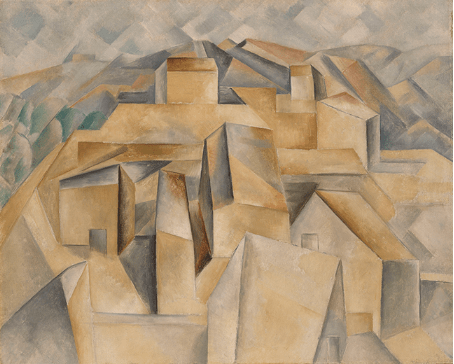
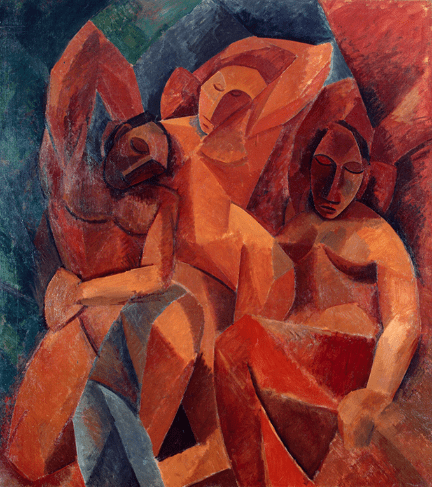
Picasso along with other artists in the modern era were faced with an introspective, creative dilemma. They have all attended prestigious schools for art and have a honed down understanding of formal and technical design. But where do you go with that? Artists have been emerging from universities with eurocentric talents that were never really tested against anything else. Yes we love the sense of drama and reality we get from Caravagio and the picture like quality that comes from a painter like Raphael, but are we really pushing the bounds of creative expression enough?
Entering modernism we are struck with the beginning of widespread appropriation. Through better means of trade, communication and resources artists were able to see the art of others on a bigger scale. It was easier for artists to know works of the greats and pick up different understanding and technique through cultural exchange. In 1907 when Picasso painted Les Demoiselles d’Avignon, he shocked the salon producing a work that looked eerily familiar to art historians and enthusiasts alike. The shapes masquerade as human form while also looking like they could be part of the background. The work gives viewers a sense of taboo, as if we have walked in on something personal. Long are the days that nudes were meant to be earthly, religious or lovely to behold. This is simply lustful. If the faces in this work look familiar that’s because we have seen something like this before in Iberian sculptures. Pablo Picassos heavy influences he takes from art history was something he first denied by him. It was only later found that Picasso had an extensive collection of african art in his home. Upon first reaction his appropriation of this art was met with criticism for being disingenuous. Disingenuous to specifically, african art. In 2006 Paris’s national gallery brought together 84 of Picasso’s works putting them side by side 29 african pieces. Art historians juxtiposing these Picassos portraits with african sculptures showed the resemblances were uncanny, furthering peoples ideas of him appropriating or more seriously plagarizing these works. Works made by underappreciated lesser known minority groups that Picasso was capitalizing on. It is a commonly held belief that the man behind cubism and post impressionist movements would not be the celebrated artist he is today had he not stolen from african art.
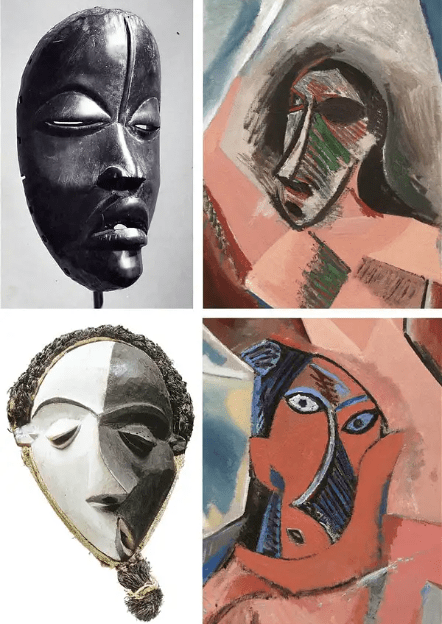
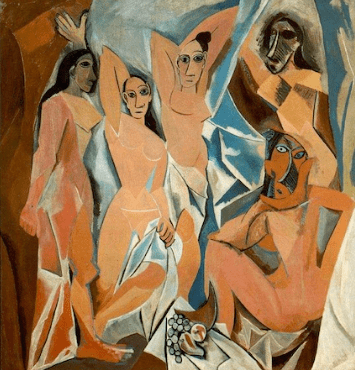
Picasso is an artist that wears his influences on his sleeve. Often using the art of others, but cementing his position as just an alternative thinker. We can say what we want about Picasso as a person. Surely he wasn’t a perfect man having some terrible vices and perhaps a proclivity for over-burrowing in his creative process. But it takes a couragous artist to know that sometimes the best isn’t good enough. Picasso built his own independent style based on decades of understanding the universe of art and what it lacks, a sense of childlike wonder. Sometimes only so much can be felt from a dramatic, life-like picture but a painting that takes on more forms than one, that plays with color, and throws mainstay art techniques to the wind. Why wouldn’t you want that? Or more importantly, why not try to understand that.