There are plenty of great artists that need to borrow from the past in order to create new, beautiful art. Quinten Tarantino for example wrote his first feature film Reservoir Dogs with a scene irrefutably taken from Ringo Lam’s 1987 movie City on Fire. If he were to not take that concept and turn it into something new then perhaps the movie would not have grossed over 2.8 million at Sundance and be one of the most notorious heist films of all time. Artists and creators have been borrowing since the dawn of time; since there were works to be borrowed, even in the 14th century. The black plague causing mass death gave way for a frenzy of new art production. During this time of sorrow, death, and hopelessness had people longing for something different in life and art. The Italian renaissance period gave way for new, more secular art to be created. The focus shifted from renderings of refined, religious deities to free form imagery of nature and life, focusing on humanism. It was the spark of art inspired by the possible achievements of mankind rather than through religion.
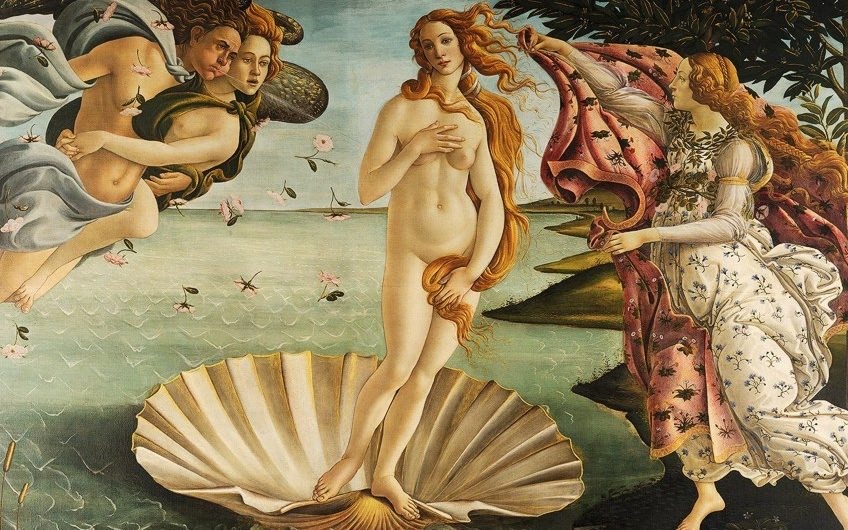
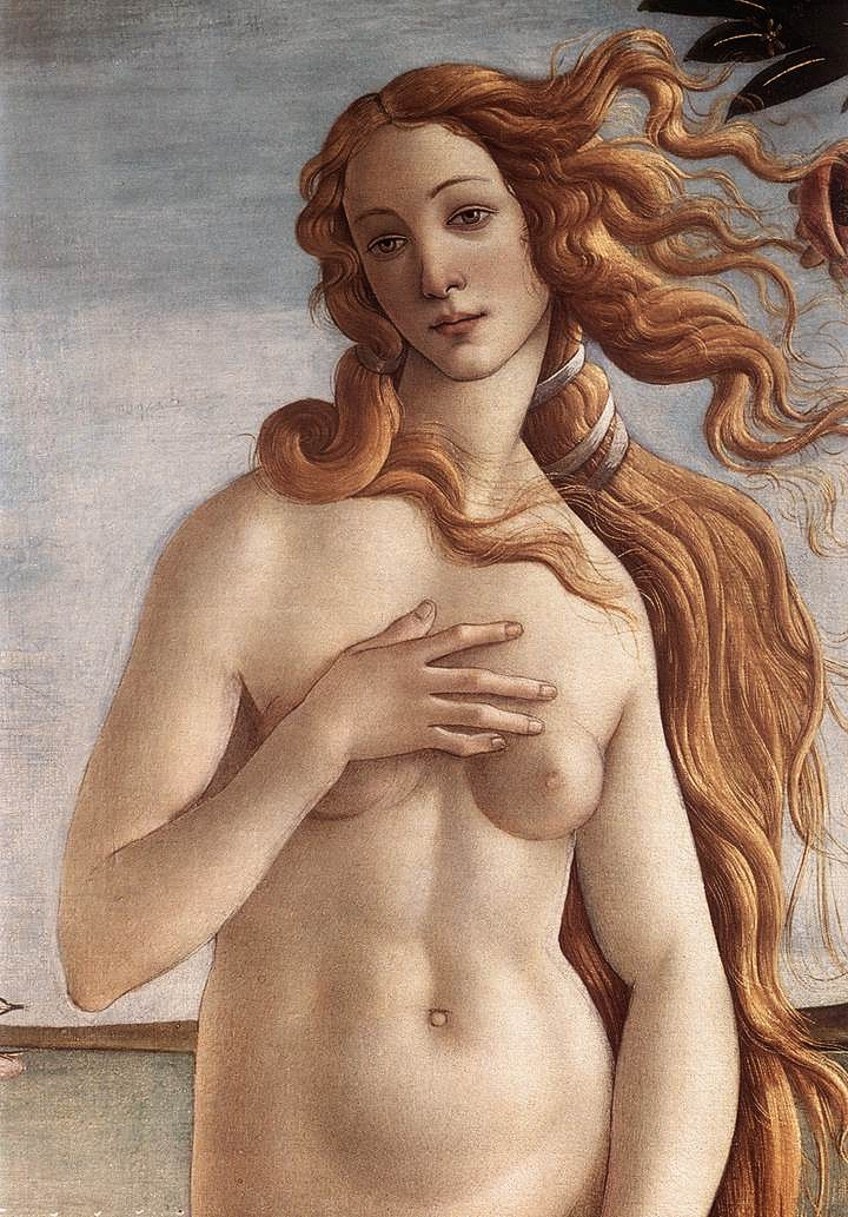
One of the most striking works we were bestowed from the rebirth of the italian renaissance is Sandro Botticelli’s, The Birth of Venus. He was one of the first painters of his time to produce non religious scenes, making art for pleasure not to depict or please a god. One specific technique we see here reinstated by Botticelli is the contrapposto pose. Popularized in Greek and Roman art, the contrapposto is a stance held by the subject bearing weight on one leg and angling the shoulders in the contrasting direction displaying the human form well. This is not the only familiar thing we see about Venus, it is also the arrangement of her hands, they cover her genitals and breasts, this pose is called the pudica. Venus was one of the first female nudes we have seen with an inviting nature about her. She stands tall and proud. The pudica before usually implied shame like it did in eve when she was banished from the garden of eden. Venus’s pudica is graceful and unshameful, almost daring you to look at her and absorb her beauty. This came as a surprise to viewers normally seeing the nude in a different light. You could even say the concept of a nude itself was reborn during the Italian renaissance.
Following botticelli’s shift in western art in 1485 more artists spoke their artistic secular voices. Leonardo da Vinci who would go on to be one of the greatest artists of all time, created his work Vitruvian man proving that beauty can be found in depicting true anatomy and proper body proportions. Proportions, one point perspective and foreshortening all were newly studied topics at this time. Technique and having technical understanding is what gave these artists the ability to create more convincing works. Revamping these popular techniques through a new lens proved to be a smart endeavor for artists like Botticelli and da Vinci. Incorporating real human ideas into art and maintaining personal integrity through art creates the most genuine results, which artists found in the 14th century.
It’s easy to understand now why the birth of venus revolutionized and changed the course of art history. The Italian renaissance can easily be seen as one of the most Influential art movements. Artists may have been borrowing from greek and roman art but that is nothing compared to the art that has been produced today borrowing the techniques and ideas of pioneers like Botticelli.